Mari and I recently went on an adventure in the southern hemisphere, where we spent some time on Easter Island. The hotel where we stayed had little individual cottages with a bedroom and bath, and instead of the typical hotel card key, we were given an actual physical key to the room.
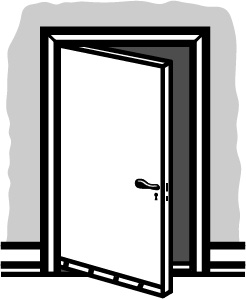
When we first arrived, Mari unlocked and opened the door and we unpacked our stuff, changed into our swimsuits, and went out and had a nice dip in the pool, leaving our key in the room and our room unlocked. I don’t recall what it was that prompted me to go back to the room, but I dried off and left Mari and our friends at the pool and walked back to our cottage. When I tried the door, the handle would not turn. It was locked.
Funny thing about humans: we construct a stable reality from our experience. A big part of that stability comes from something called confirmation bias. The brain tends to take in data that confirms our existing beliefs and rejects anything that goes against them. And this situation showed me how incredibly powerful this bias can be. Because in my world, that door was locked.
I walked back to the pool and asked Mari if she had the key. She replied, “The door is unlocked. It feels like it’s locked, but it’s not. You’ve just got to twist the knob kind of hard to open it.” I went back to our cottage, and sure enough, the door opened for me after I applied a little additional torque to the handle. My reality rocked a little bit because I had been absolutely certain that door was locked. And that was the inspiration for this little post.
I don’t think we realize how different each of our realities can be. Our guide on the island was descended from the native Rapa Nui people, and he shared with us that when ships arrived from Europe for the first time, his ancestors did not see them approaching. Those ships were so foreign to their minds that they couldn’t believe their eyes. The reality they constructed in that moment was stable, and it did not include European ships.
Years ago Mari and I learned about constructed realities and it helped us get over our fights where both of us were sure we were right. We still occasionally find ourselves going down that ugly path, but it doesn’t take long for us to stop, take a breath, and remember that if there is any such thing as one objective reality, neither of us is aware of it.
 keith sparkjoy
Hey Keith,
JW Wilson here… From Learning Code Institute I’ll send you a email update to all that’s going on… I hope your life is going well…
Looking forward to catching up and hearing about how things are going in your world.
jw
LikeLike
Keith,
First, swimming on Easter Island! That sounds really cool…
“Perception is reality”
I wonder if developing the training systems needed to ‘educate’ AI algorithms will also add to our ability to better see / detect implicit bias?
Maybe a positive outcome of the potential downsides of AI.
I highly recommend the book ‘2o41” for an amazing imaginative view into the 15 years or so.
Thanks for sharing images of your recent adventure. Hugs to your adventure partner!
v/r
Michael
Michael Niblack (c)703-987-5711 niblack@allowus.com
“You cannot reason a person out of a position he did not reason himself into in the first place.” Jonathan Swift
>
LikeLike